This terraced house sits on the edge of the architect Richard Norman Shaw’s Bedford Park in London. Its owners – a professor of music and teacher of the Alexander Technique, her husband and their teenage daughter – had lived there for several years and had outgrown the building’s original Lshaped kitchen and wanted to create a relaxed family living and dining area on the ground floor.
The client was keen that the new space feel fresh and modern, whilst being warm and inviting and true to the original fabric and character of the building.
Tamsin designed a generous extension, removing the internal walls which divided the space at the back of the house and extending only marginally out into the garden in order to open the internal space and views of the garden.
As well as designing the joinery and furnishing the interior Tamsin selected all the decorative items for the space – including the art work, lighting – combining different styles and periods, colours and patterns to create the undecorated, almost impromptu look that is at the heart of her style.
“You don’t need very much for a home to feel really wonderful”, says Tamsin, who urges us to buy once and buy well, and always save up to buy the real thing rather than impulse purchasing imitations.”
FIONA MCKENZIE JOHNSTONE, HOUSE & GARDEN (MAY 2024).

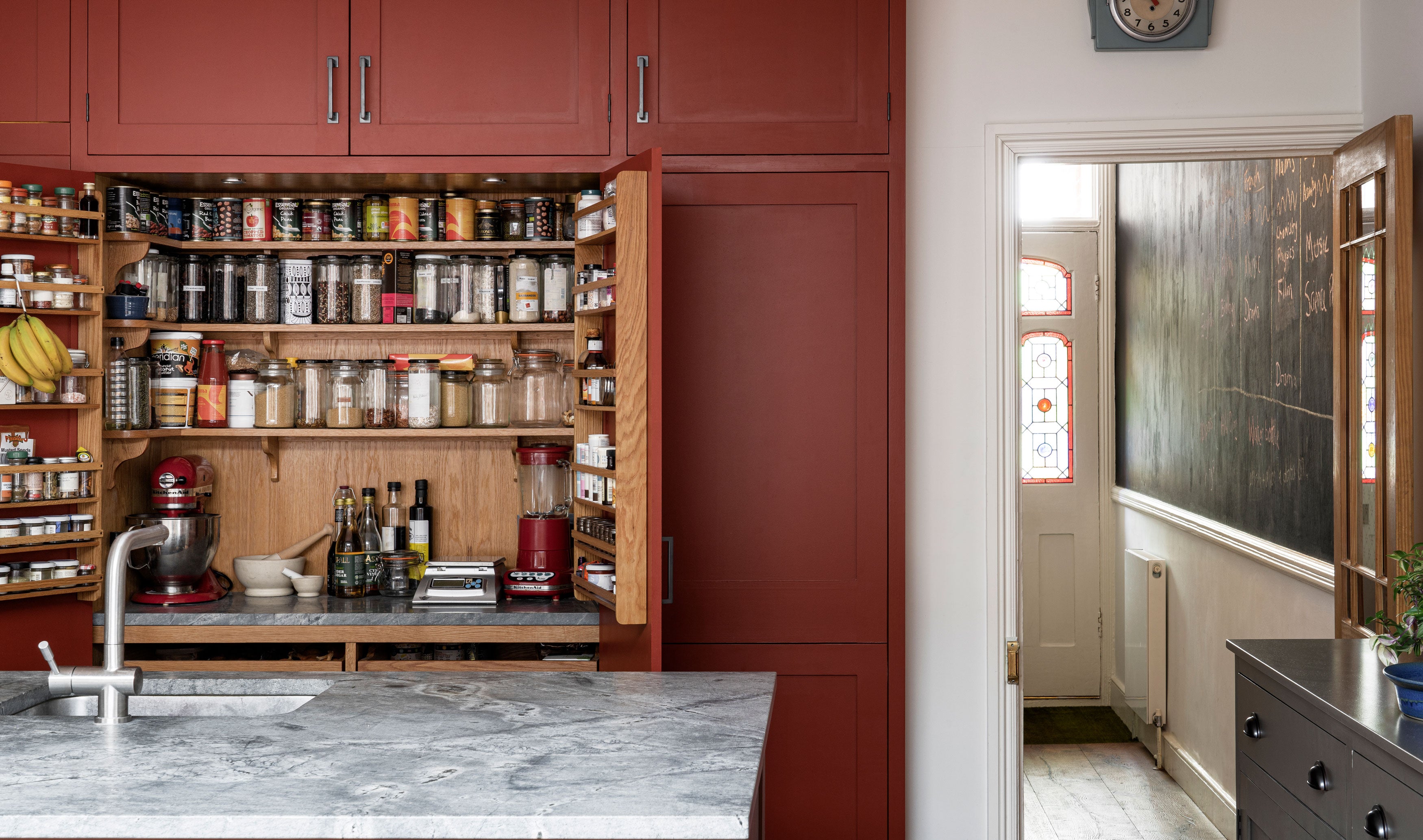
The ‘cupboard door’ on the far left hand side of the rear wall behind the kitchen island leads to a hidden secret kitchenette tucked under the house’s staircase which runs behind.
The kitchen sits at the rear of the house and is reached via a long bright light filled hall. The units on the rear wall in the kitchen perfectly complement the colours in the original stained glass in the front door. The top half of the hall wall was painted with black board paint – ‘Its fun and relaxed and welcoming – it’s also great for remembering things’ says the owner.
Tamsin designed bespoke joinery to make the most of every inch of space: Cupboards hand painted a rich warm red extend across the rear wall and rise up to meet the ceiling softening and adding warmth to an otherwise simply decorated space. A central island looks out over the gardens and the open skies beyond.


Simple furnishings, an eclectic mix of antiques and art, clean straight lines, plain white walls earthy colours and a rich natural wood floor – This is a space which is perfectly plain and restrained but warm and inviting none the less. The stained glass in the original kitchen door inspired the room’s rich earth toned colour palette.
A central large work surface is ideal for food preparation. The sink looks out onto the garden. A double larder is also home to a food mixer and blender ensuring easy access and minimising clutter.


Attention to detail and serendipitous discoveries (such as the beautiful blue wall hung clock above the kitchen door and an unusual mid century Danish spice rack) combine to create a space which feels individual and personal and which means it is less likely to date. The walls are painted white but everywhere you look there is colour and pattern – even the inside of the cutlery drawers are lined with a stunning blue baize.

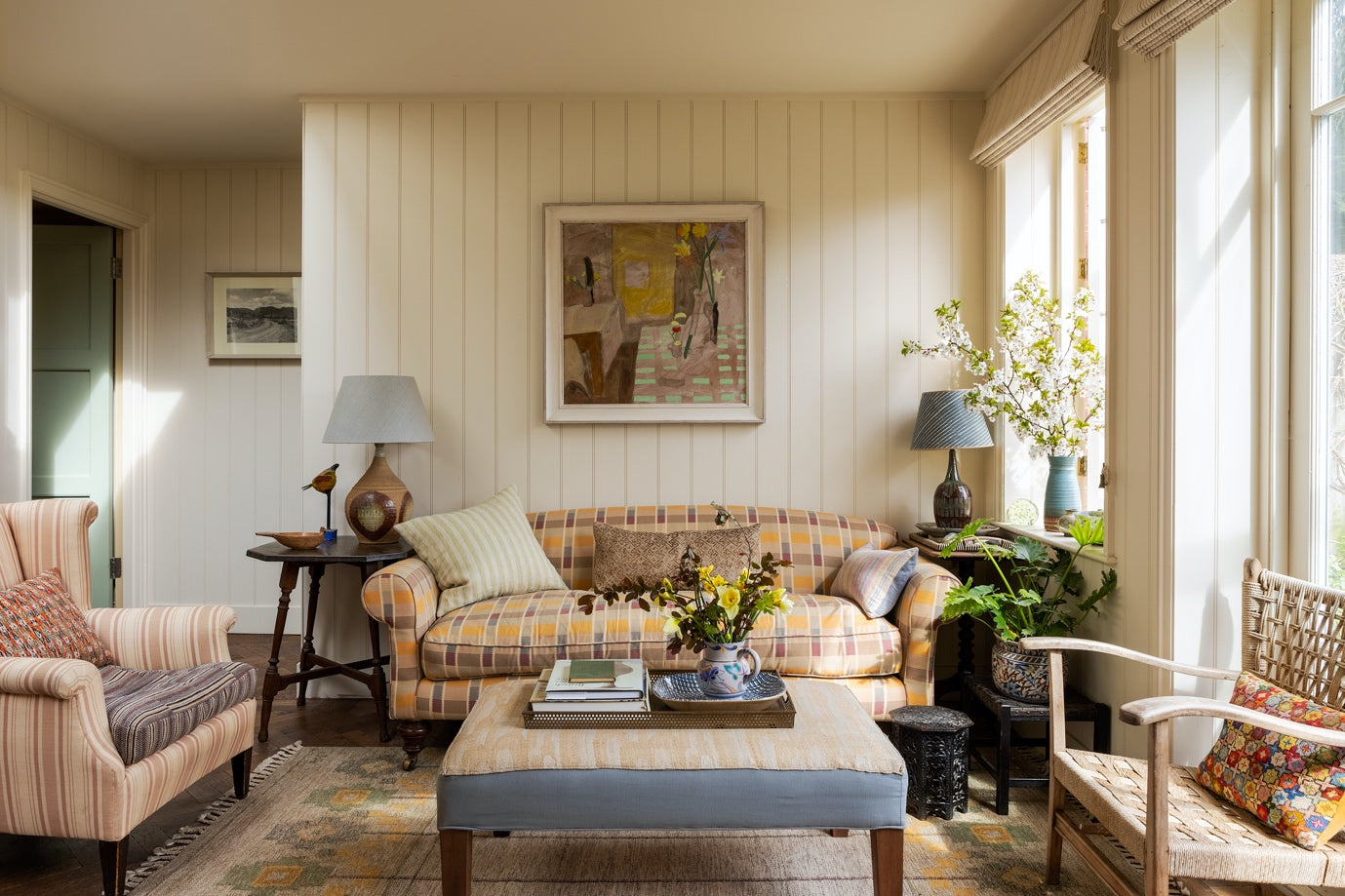
The Victorian sofa was found in a market and reupholstered in a soft olive herringbone tweed – its bulky presence adds a sense of robust but relaxed comfort to the space. The oil painting of an Italian landscape above it is by Christabel Forbes and inspired the choice of vintage textiles used for the cushions on the sofa and the curtains. The shade on the mid century floor lamp was made from a remnant of hand block printed paper.

Against the background of fresh white walls, the warm colours, patterns and textures of the upholstery, cushions and vintage rug look rich and cosy.
The vintage Danish table and chairs were chosen for their ergonomic as well as aesthetic appeal the seat pads reupholstered in a practical, richly textured woven damson linen. The clients adherence to the Alexander technique stipulated a backless bench seat which was firm and supportive – loose cushions were added as a concession to guests wiping to slouch.

Completed in 2020. London.
Shop the look


Vintage Fifties Reupholstered Chair

Mid-Century Silver Pentagonal Lamp

Studio Pottery bowl