“If Carlsberg made gastropubs… it would be just like this, with a roaring fire, beautifully-lit rooms, well-assembled wine list and a menu which is driven by quality ingredients (and also with a garden that’s perfect for a romantic summer evening: twinkling lights and lots of greenery). ”
HARDEN’S (2022).
Entirely independent, Simon and Tamsin wanted to create a much-loved local – robust, down-to-earth, earthy, relaxed, sociable. A place which felt part of the neighbourhood and its community and true to who and what they love and valued. Born out of a small budget but a lot of love, they did it gradually over time, installing a reclaimed marble fireplace in the corner of the bar; adding to and replacing furniture as and when required, collecting photographs and ‘kit’ as and when the right piece presented itself – in the process creating accidental conversations which lend the pub its unique charm.

Animated, noisy, informal and convivial, the pub feels reassuringly ‘bish bosh’: Vintage industrial factory lamps cast a warm glow over drinkers at the bar; Old beer mats collected in markets are pasted on the walls, The ceiling painted a rich glossy red ‘the colour of a good Bloody Mary’.

A large slightly ragged Union Jack, red geraniums spilling out from window boxes above vintage bistro tables and chairs, reclaimed water tanks filled to overflowing with a riot of fennel, pittosporum and fragrant herbs, the brewery’s original lettering (still against the original blue paint) signal the bold originality and generosity of spirit that made The Carpenters’ Arms one of London’s best loved pubs.
Plain surfaces, natural textures, simple forms. Simon and Tamsin drew on their own idea of how they would like a pub to be. Although completely refurbished in 2017 the pub feels as if it has always been there. Tables are used around the clock – early lunches, darkened trysts – it has and continues to wear well. The flickering glow of an open fire adds warmth even on colder days in the summer months.

“Best for: Stylish comfort for pints and meals, plus a destination for private dining… a beautiful private dining room that’s high on our list of places to book for a special occasion.”
THE BEST PUBS IN LONDON, HOUSE & GARDEN (2025).

The crockery was sought out item by item in second-hand shops and markets. They found local producers and small-scale suppliers who shared their belief in and commitment to the principles of slow food. Plain oak boards, trestles, work-a-day furniture and honest sturdy pieces create something which feels immediately welcoming, solid and homely. Nothing is new.


Tamsin and Simon sought to capture the generous, inclusive spirit of proper old-fashioned pubs and avoided fakery of any kind. An old photograph of Hammersmith Mall hangs on the wall in one corner of the bar – an old piano stool is pulled up at a table by the fire, and bench seating is softened with cushions made from vintage plaid blankets. Inspired by the high-backed settles seen in old taverns and pubs (Edwin Lutyens designed a beautiful settle for the Dunn Inn in Devon) Tamsin designed high-backed wooden benches to create a sense of enclosure and belonging, a room within a room – spaces in which bums could be squeezed on seats – ‘budging up’ and bringing people together. The original Guinness poster was found in a market, a basket of blankets by the doors leading to the garden provides an extra layer of warmth for anyone sitting outside.
A pub or restaurant’s design says everything about who it is and what it stands for and is understood through all the senses – every single point of contact communicates its values, ethics and helps tell its story. Their commitment to and belief in the value of the past, the over-looked, the small, the independent, the unique and the forgotten is evident throughout.
The entire pub was furnished with salvaged items and furniture. From the pictures on the walls to the crockery, the pepper mills, the trays for transporting drinks from the bar and the scoops for dispensing home-roasted nuts and requisite pork scratchings.


A chair is never just a chair. Its material, shape and colour evoke all sorts of tactile, sensual memories. Relaxed and rustic, the seemingly randomly assembled mish-mash of reclaimed chairs and tables were in fact carefully selected for their individual charm and character and ability to withstand further wear and tear.


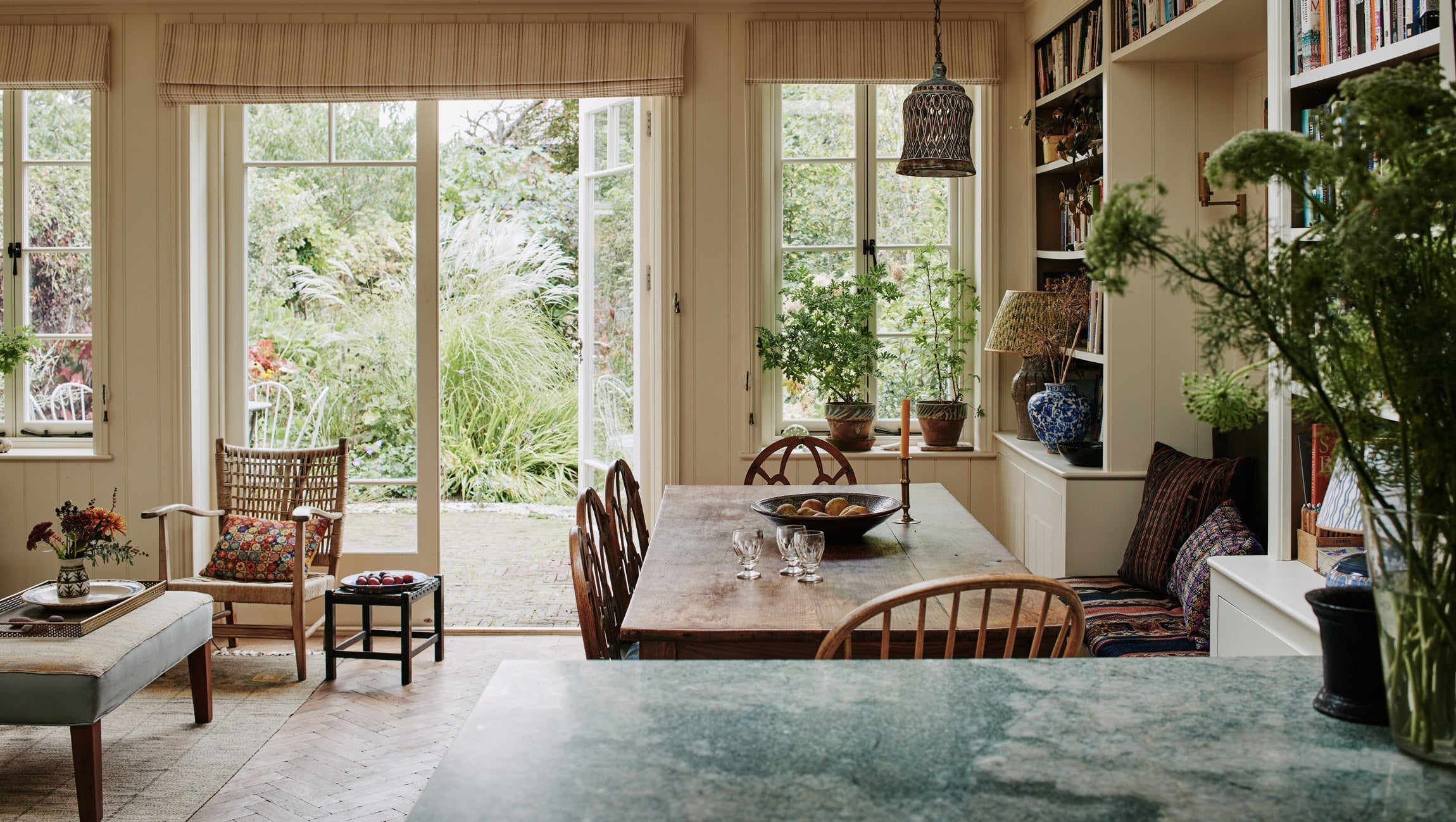
Outside they built deep raised beds around the edge of the small walled garden and planted a mature olive tree in the centre. Surrounded by jasmine and native plants such as agapanthus, crocosmia, fennel, verbena and orange blossom you feel a million miles away from the hustle and bustle of London.

Just like the homes Tamsin designs, the pub wasn’t put together with colour charts, fabric swatches or mood boards but with a simple gut feeling for what’s right. A mish-mash of reclaimed chairs and tables – seemingly randomly assembled but in fact carefully selected for their individual charm and character, their surfaces and edges reassuringly battered and bleached with age and able to withstand further wear and tear.

Branches of Pussy willow picked from the river on a solid Victorian table in the hall outside the dining room on the first floor. The colours of the collection of hand-painted nineteenth-century Spanish chargers glow against the rich earthy hues of the walls.
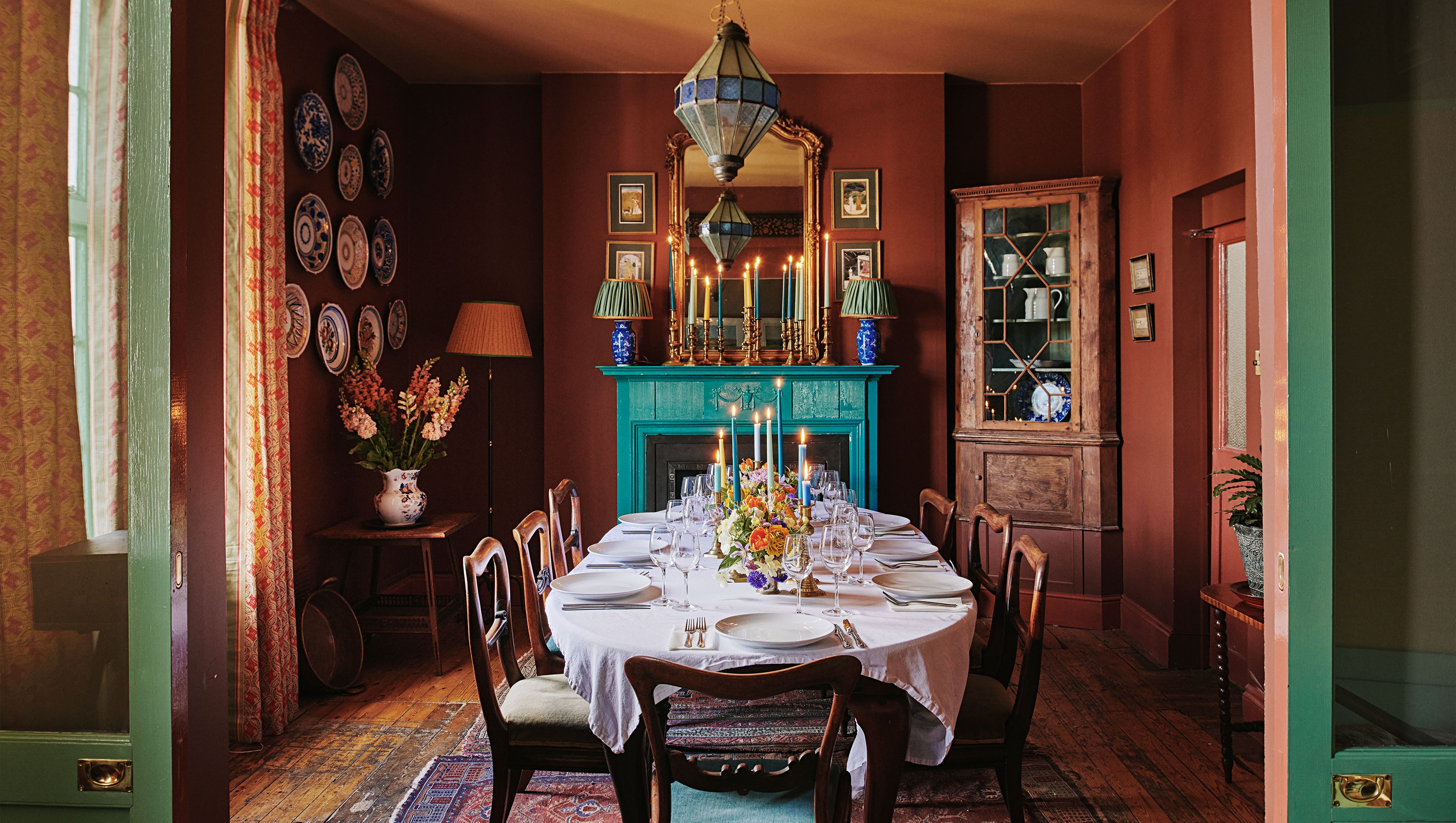
Poverty the great preserver: The pub retained many of its original features including its windows and doors and all its original floorboards (just about). In the first-floor dining room, Tamsin added old rugs to soften the acoustics in what can sometimes become a somewhat rowdy space. The antique fireplace is reclaimed – its Arts and Crafts design is a nod to those seen in Emery Walker’s house and William Morris’s studio, both of which are just a few minutes’ walk away. A collection of jugs can be glimpsed in the cupboard at the end of the room, the discreet glimmer of coloured glass in one of a pair of original Victorian lanterns adds to the atmosphere of the room.


They divided the space in two to create a large private dining room and bar. Separated at one end by sliding doors the bar area can be opened or closed off from the main dining room as required.


Furnished with landscape oil paintings from the 1930s in their original carved gilt frames, a smattering of antiques, beautiful lighting, thick luxurious curtains, and proper antique rugs, they wanted the space to feel like a proper old-fashioned dining room—a home-from-home—that could be used for working lunches, intimate lunches, and celebratory dinners with friends and family.


They added a large fireplace to the first-floor dining room to add warmth and topped it with an antique ornate gilt mirror to create the feeling of a proper old-fashioned dining room. The fireplace surround is reclaimed and was painted a vibrant teal to complement the warm earth-red tones of the walls.
The Carpenter’s Arms, 91 Black Lion Lane, London, W6 9BG.
AT HOME AND WORK WITH THE INTERIOR DESIGNER BEHIND ONE OF LONDON’S BEST-LOVED PUBS. House & Garden (2022).
Featured in Best pubs in London, House & Garden | TAT LONDON | The Wall Street Journal.
Shop the Edit

Shallow Sgraffito style bowl

Smoky green Whitefriars glass bowl

Majolica plate with foliage design

Val St Lambert glass vase

A tiered lamp in the style of George Halais